Skip to content

Looking for the buycycle marketplace?Visit buycycle.com

Settings

Deep winter scenery in the Horlachtal with a winding stream and snow-covered peaks
Ski track through deep snow in the Zwieselbachtal facing mountain peaks
Schweinfurter Hütte in deep winter snow with ski tracks and a massive white peak behind.
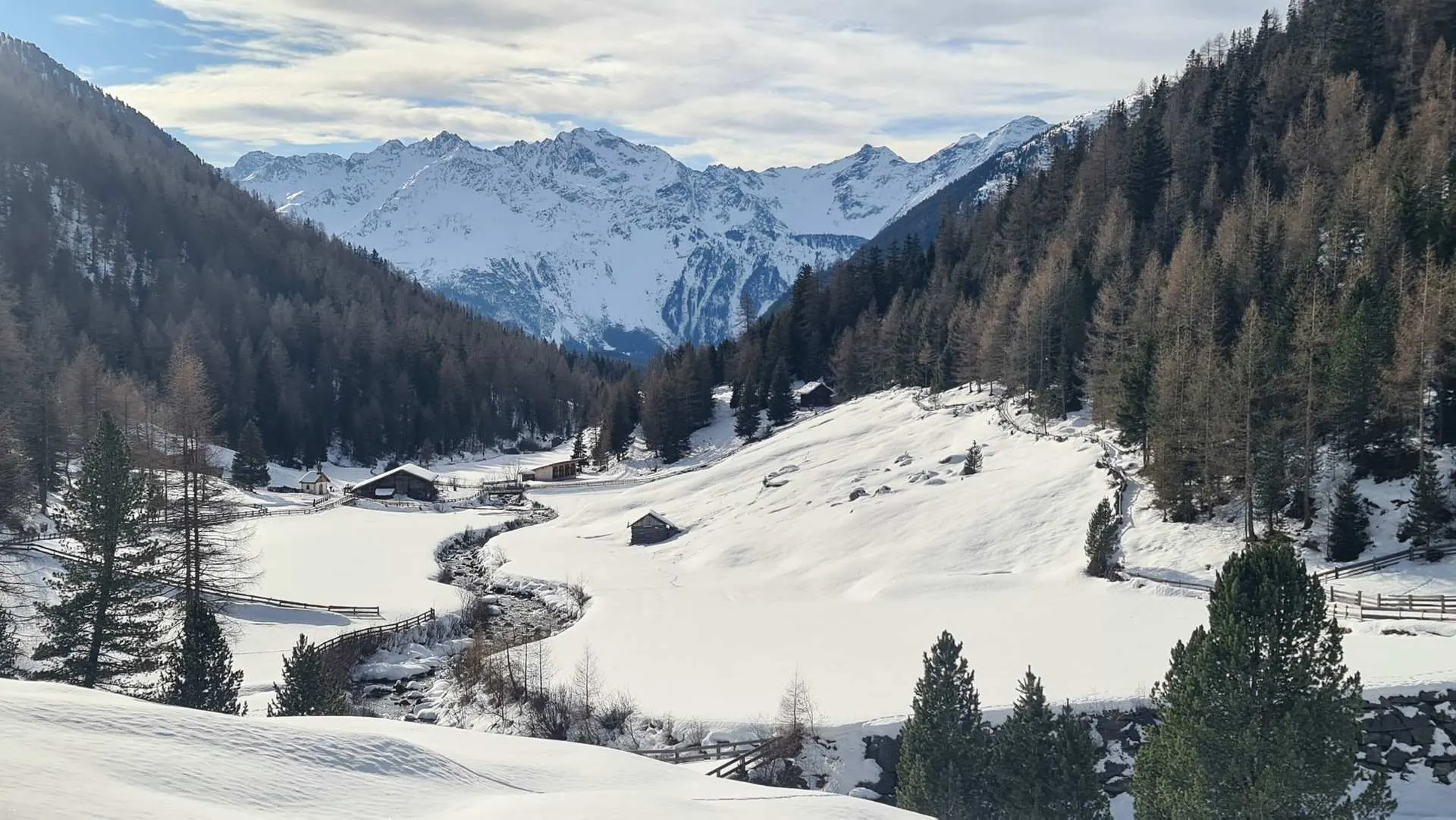
Snow-covered alpine valley with a winding stream, small wooden huts, forested slopes, and mountain peaks beyond.
Winter view of the snowy Zwieselbacher mountains and the area around Schweinfurter Hütte.
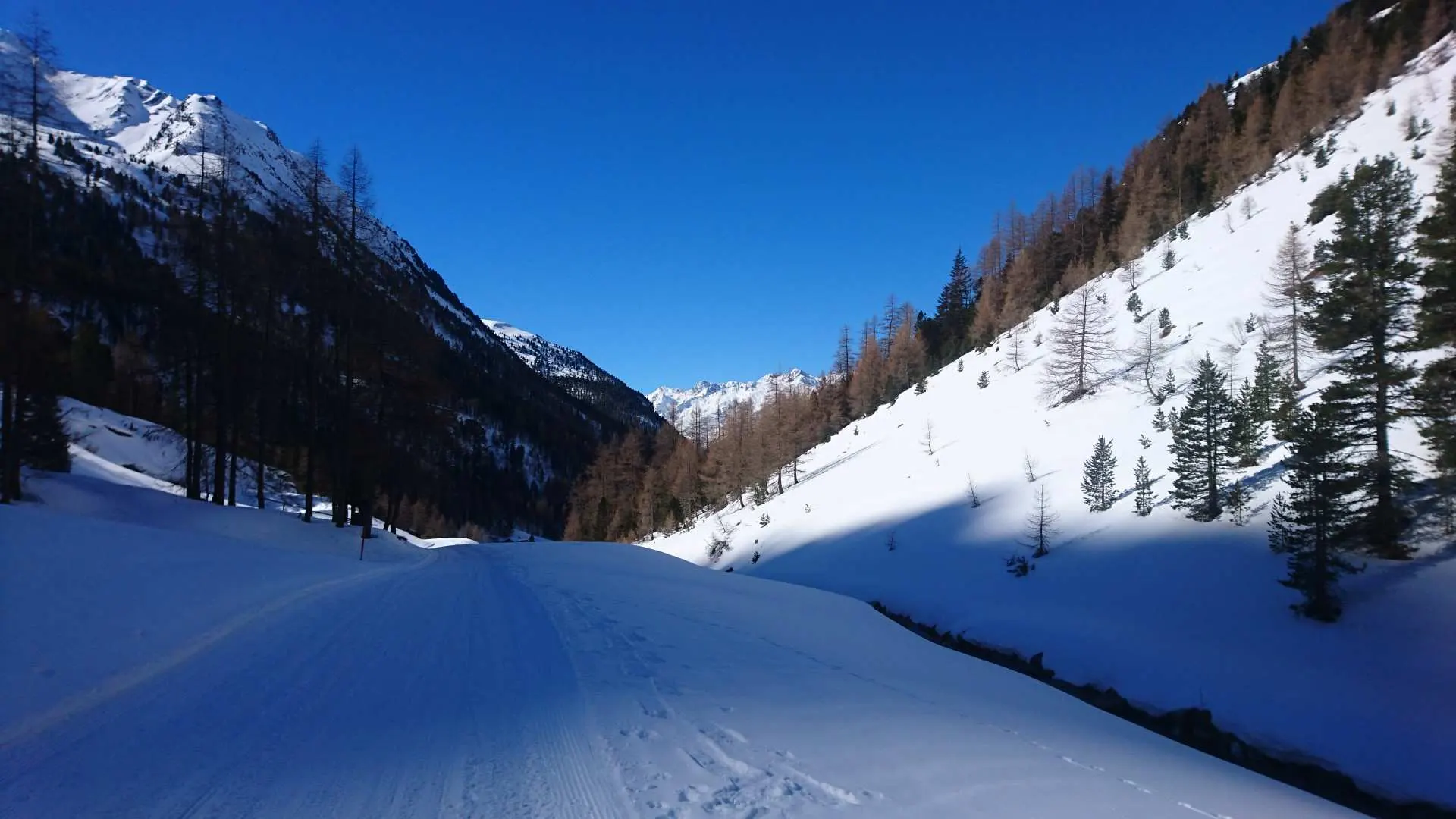
Snow-covered valley track in deep shadow, with sunlit snowy slopes, pine trees, and a clear blue sky.

Schweinfurter Hütte

↑ 489 mDuration: 2.5 hDifficulty: F+ Easy

Current conditions: Not enough dataUpdated

Schweinfurter Hütte conditions today

Avalanche danger level

21
  • 2 · ModerateThe snowpack is only moderately well bonded on some steep slopes; otherwise well bonded in general. Triggering is possible, primarily from high additional loads, particularly on the indicated steep slopes. Very large natural avalanches are unlikely.Steep slopes: steeper than about 30 degrees.Low additional load: an individual skier riding softly, not falling; a snowshoer; a group keeping distances of at least 10 m.High additional load: two or more skiers without good spacing; a snow groomer; explosives.How to read the avalanche bulletinSource & further information: European avalanche danger scale (EAWS) (opens in a new tab)above 2,400 m
  • 1 · LowThe snowpack is well bonded and stable in general. Triggering is generally possible only from high additional loads in isolated areas of very steep, extreme terrain. Only small and medium natural avalanches are possible.Steep slopes: steeper than about 30 degrees.Low additional load: an individual skier riding softly, not falling; a snowshoer; a group keeping distances of at least 10 m.High additional load: two or more skiers without good spacing; a snow groomer; explosives.How to read the avalanche bulletinSource & further information: European avalanche danger scale (EAWS) (opens in a new tab)below 2,400 m
  • Persistent weak layerThe avalanche problem is related to the presence of one or more persistent weak layers in the old snowpack. These weak layers typically include faceted crystals, depth hoar or surface hoar crystals.Where: The avalanche problem can be widespread or quite isolated. It can exist in all aspects, but is more frequently found on shady, wind sheltered slopes.When: Weak layers can persist for weeks to months; possibly even during most of the winter season.Travel advice: Travel conservatively and avoid terrain features (e.g. large steep slopes) where consequences of being caught are large (e.g. deep burial). Consider the history of weather and snow cover processes in the area. Be extra cautious in areas with a thin snowpack and at the transition from thin to deep snowpack. The release of avalanches in persistent weak layers are a significant cause of recreational avalanche fatalities.How to read the avalanche bulletinSource & further information: Typical avalanche problems (EAWS) (opens in a new tab)above 2,400 m

  • Wind slabWind slabs are formed when loose snow in near-surface layers (new snow or old snow) is transported and deposited by wind.Where: Highly variable but typically on leeward slopes, gullies and bowls, near distinct changes in slope angle, behind ridgelines or other wind-sheltered locations. More common above treeline.When: The wind slab problem can evolve very quickly. The problem lasts typically during the snowdrift event and tends to stabilize within a few days following the storm cycle.Travel advice: Avoid snow drifted deposits in steep terrain.How to read the avalanche bulletinSource & further information: Typical avalanche problems (EAWS) (opens in a new tab)above 2,200 m

Avalanche bulletin

How to read the avalanche bulletin

Kühtai - Geigen Ridge

100 % of the route

Valid from
Valid until
21
  • 2 · ModerateThe snowpack is only moderately well bonded on some steep slopes; otherwise well bonded in general. Triggering is possible, primarily from high additional loads, particularly on the indicated steep slopes. Very large natural avalanches are unlikely.Steep slopes: steeper than about 30 degrees.Low additional load: an individual skier riding softly, not falling; a snowshoer; a group keeping distances of at least 10 m.High additional load: two or more skiers without good spacing; a snow groomer; explosives.How to read the avalanche bulletinSource & further information: European avalanche danger scale (EAWS) (opens in a new tab)above 2,400 m
  • 1 · LowThe snowpack is well bonded and stable in general. Triggering is generally possible only from high additional loads in isolated areas of very steep, extreme terrain. Only small and medium natural avalanches are possible.Steep slopes: steeper than about 30 degrees.Low additional load: an individual skier riding softly, not falling; a snowshoer; a group keeping distances of at least 10 m.High additional load: two or more skiers without good spacing; a snow groomer; explosives.How to read the avalanche bulletinSource & further information: European avalanche danger scale (EAWS) (opens in a new tab)below 2,400 m

Weak layers in the old snowpack necessitate caution. This applies in particular between approximately 2400 and 2900 m. Fresh wind slabs at high altitudes.

2 · ModerateThe snowpack is only moderately well bonded on some steep slopes; otherwise well bonded in general. Triggering is possible, primarily from high additional loads, particularly on the indicated steep slopes. Very large natural avalanches are unlikely.Steep slopes: steeper than about 30 degrees.Low additional load: an individual skier riding softly, not falling; a snowshoer; a group keeping distances of at least 10 m.High additional load: two or more skiers without good spacing; a snow groomer; explosives.How to read the avalanche bulletinSource & further information: European avalanche danger scale (EAWS) (opens in a new tab) · Dry avalanches

above 2,400 m
  • Persistent weak layerThe avalanche problem is related to the presence of one or more persistent weak layers in the old snowpack. These weak layers typically include faceted crystals, depth hoar or surface hoar crystals.Where: The avalanche problem can be widespread or quite isolated. It can exist in all aspects, but is more frequently found on shady, wind sheltered slopes.When: Weak layers can persist for weeks to months; possibly even during most of the winter season.Travel advice: Travel conservatively and avoid terrain features (e.g. large steep slopes) where consequences of being caught are large (e.g. deep burial). Consider the history of weather and snow cover processes in the area. Be extra cautious in areas with a thin snowpack and at the transition from thin to deep snowpack. The release of avalanches in persistent weak layers are a significant cause of recreational avalanche fatalities.How to read the avalanche bulletinSource & further information: Typical avalanche problems (EAWS) (opens in a new tab)

Snowpack stability: poor · Frequency: a few · Avalanche size: medium (2)

1 · LowThe snowpack is well bonded and stable in general. Triggering is generally possible only from high additional loads in isolated areas of very steep, extreme terrain. Only small and medium natural avalanches are possible.Steep slopes: steeper than about 30 degrees.Low additional load: an individual skier riding softly, not falling; a snowshoer; a group keeping distances of at least 10 m.High additional load: two or more skiers without good spacing; a snow groomer; explosives.How to read the avalanche bulletinSource & further information: European avalanche danger scale (EAWS) (opens in a new tab) · Dry avalanches

above 2,200 m
  • Wind slabWind slabs are formed when loose snow in near-surface layers (new snow or old snow) is transported and deposited by wind.Where: Highly variable but typically on leeward slopes, gullies and bowls, near distinct changes in slope angle, behind ridgelines or other wind-sheltered locations. More common above treeline.When: The wind slab problem can evolve very quickly. The problem lasts typically during the snowdrift event and tends to stabilize within a few days following the storm cycle.Travel advice: Avoid snow drifted deposits in steep terrain.How to read the avalanche bulletinSource & further information: Typical avalanche problems (EAWS) (opens in a new tab)

Snowpack stability: poor · Frequency: a few · Avalanche size: small (1)

Danger description

Weak layers in the old snowpack can be released even by individual winter sport participants. This applies in particular on very steep west, north and east facing slopes between approximately 2400 and 2900 m. Caution is to be exercised in particular in gullies and bowls, and behind abrupt changes in the terrain. Avalanches are rather small.
In addition the fresh wind slabs should be taken into account. Such avalanche prone locations are to be found in steep terrain above approximately 2200 m and adjacent to ridgelines. They are mostly small. They are clearly recognisable to the trained eye.
Along the border with Vorarlberg individual gliding avalanches are possible, but they will be mostly small.
The Avalanche Warning Service currently has only a small amount of information that has been collected in the field, so that the avalanche danger should be investigated especially thoroughly in the relevant locality.

Full bulletin at Avalanche.report · issued

Source: Avalanche.report, issued , valid until .

Snow height

27cm

Valley · 1,585 m

Gries im Sulztal

24cm

Upper · 1,917 m

Hairlachbach (Wasserfassung)

+19 cm fresh snow in 72 h.

Source: LWD Tirol (avalanche.report), read . Measured at stations nearby, not on the route.

Reported completions, last 48 h

No Strava segment mapped to this ski tour yet.

There is not enough recent information yet for conditions today on this ski tour. Avalanche danger level: 2 (Moderate) above 2,400 m, 1 (Low) below 2,400 m. Snow height: 27 cm (Gries im Sulztal, 1,585 m), 24 cm (Hairlachbach (Wasserfassung), 1,917 m).

A planning aid, not a safety check. Conditions today are compiled automatically and can be wrong. Decide on site, at your own risk.

Most recent reports

Weather

Source: Open-Meteo, fetched .

Forecast for the start and the summit, from November 27, 2026
ElevationToday Nov 27Sat Nov 28Sun Nov 29
Start1,544 m

-2°-11°

Wind 13 km/h

1°-11°

Wind 12 km/h

4°0°

Wind 16 km/h

Summit2,030 m

-5°-11°

Wind 8 km/h

-0°-11°

Wind 10 km/h

2°-7°

Wind 9 km/h

Freezing level: today 1,410 m · Sat 1,940 m · Sun 2,720 m. Above this height precipitation falls as snow.

Route map

Ski tour data provided by Skitourenguru. For the daily avalanche risk rating and the danger spots along this route, head to Skitourenguru.

View the avalanche risk along the route onSkitourenguru (opens in a new tab)

PNiederthai · 1,544 m1Schweinfurter Hütte · 2,030 m

Elevation profile5.7 km · ↑ 489 m · high point 2,033 m

Ascent track: Skitourenguru

Route description

  1. P

    Start from Niederthai

    1,544 → 1,738 m

    In Niederthai, the track starts into the valley along the flat valley floor. After the first kilometer, the incline increases slightly but remains moderate.

  2. 1

    Through the middle valley floor

    1,738 → 1,881 m

    Continuing into the valley, very flat passages alternate with short, gentle rises. The route remains in the valley floor, following the natural course of the valley.

  3. 2

    Final ascent to the Schweinfurter Hütte

    1,881 → 2,030 m

    Before the head of the valley, the slope steepens slightly. Ascend in switchbacks up to the Schweinfurter Hütte at 2030 m. Descent as ascent.

Download the GPX track

The ascent track of Schweinfurter Hütte as a GPX file, for your GPS watch, phone app or route planner.

5.7 km · ↑ 489 m · high point 2,033 m · 662 track points

Download GPX

Ascent track: Skitourenguru. A track is a planning aid, not a guarantee: check the avalanche bulletin and conditions on the day and adapt the route on the ground.

All ski tours in Kühtai - Geigen Ridge

Photo credits

Photos in the slider above, in order. Author and original on Wikimedia Commons (with licence) or komoot (used with permission).

  1. 01Henk MonsterCC BY 3.0(opens in a new tab)
  2. 02Henk MonsterCC BY 3.0(opens in a new tab)
  3. 03Henk MonsterCC BY 3.0(opens in a new tab)
  4. 04Wolf Igelkomoot(opens in a new tab)
  5. 05Henk MonsterCC BY 3.0(opens in a new tab)
  6. 06Walter Santerkomoot(opens in a new tab)