Looking for the buycycle marketplace?Visit buycycle.com



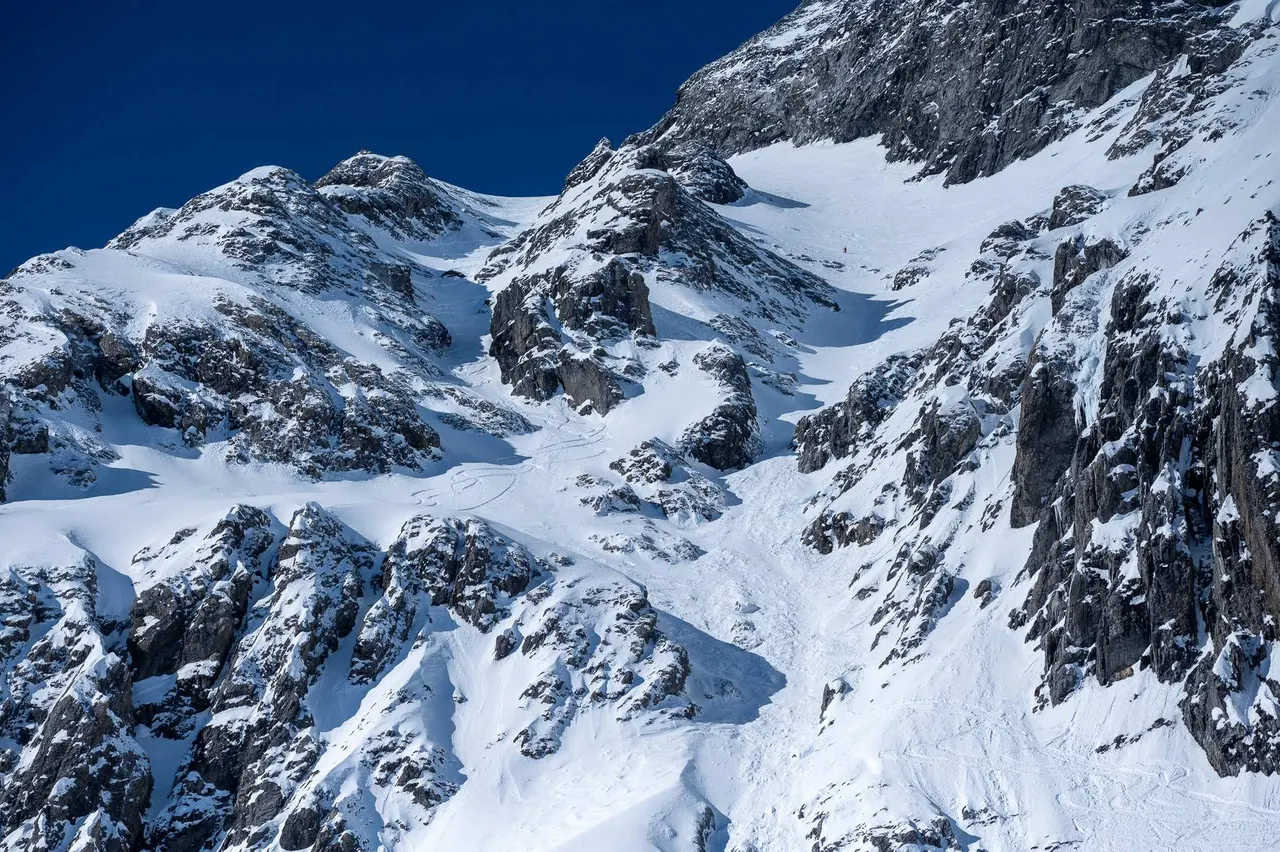



Königsspitze
↑ 1,326 mDuration: 4.5 hDifficulty: D− Difficult
Current conditions: Not enough dataUpdated
Königsspitze conditions today
Avalanche danger level
- 2 · ModerateThe snowpack is only moderately well bonded on some steep slopes; otherwise well bonded in general. Triggering is possible, primarily from high additional loads, particularly on the indicated steep slopes. Very large natural avalanches are unlikely.Steep slopes: steeper than about 30 degrees.Low additional load: an individual skier riding softly, not falling; a snowshoer; a group keeping distances of at least 10 m.High additional load: two or more skiers without good spacing; a snow groomer; explosives.How to read the avalanche bulletinSource & further information: European avalanche danger scale (EAWS) (opens in a new tab)above 2,200 m
- 1 · LowThe snowpack is well bonded and stable in general. Triggering is generally possible only from high additional loads in isolated areas of very steep, extreme terrain. Only small and medium natural avalanches are possible.Steep slopes: steeper than about 30 degrees.Low additional load: an individual skier riding softly, not falling; a snowshoer; a group keeping distances of at least 10 m.High additional load: two or more skiers without good spacing; a snow groomer; explosives.How to read the avalanche bulletinSource & further information: European avalanche danger scale (EAWS) (opens in a new tab)below 2,200 m
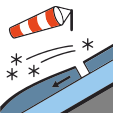 Wind slabWind slabs are formed when loose snow in near-surface layers (new snow or old snow) is transported and deposited by wind.Where: Highly variable but typically on leeward slopes, gullies and bowls, near distinct changes in slope angle, behind ridgelines or other wind-sheltered locations. More common above treeline.When: The wind slab problem can evolve very quickly. The problem lasts typically during the snowdrift event and tends to stabilize within a few days following the storm cycle.Travel advice: Avoid snow drifted deposits in steep terrain.How to read the avalanche bulletinSource & further information: Typical avalanche problems (EAWS) (opens in a new tab)above 2,200 m
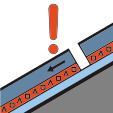 Persistent weak layerThe avalanche problem is related to the presence of one or more persistent weak layers in the old snowpack. These weak layers typically include faceted crystals, depth hoar or surface hoar crystals.Where: The avalanche problem can be widespread or quite isolated. It can exist in all aspects, but is more frequently found on shady, wind sheltered slopes.When: Weak layers can persist for weeks to months; possibly even during most of the winter season.Travel advice: Travel conservatively and avoid terrain features (e.g. large steep slopes) where consequences of being caught are large (e.g. deep burial). Consider the history of weather and snow cover processes in the area. Be extra cautious in areas with a thin snowpack and at the transition from thin to deep snowpack. The release of avalanches in persistent weak layers are a significant cause of recreational avalanche fatalities.How to read the avalanche bulletinSource & further information: Typical avalanche problems (EAWS) (opens in a new tab)above 2,600 m
Source: Avalanche.report, issued , valid until .
Snow height
55cm
Valley · 2,825 m
Madritsch - Madriccio
Upper
No reading
+25 cm fresh snow in 72 h.
Source: LWD Südtirol (avalanche.report), read . Measured at stations nearby, not on the route.
Reported completions, last 48 h
No Strava segment mapped to this ski tour yet.
There is not enough recent information yet for conditions today on this ski tour. Avalanche danger level: 2 (Moderate) above 2,200 m, 1 (Low) below 2,200 m. Snow height: 55 cm (Madritsch - Madriccio, 2,825 m).
A planning aid, not a safety check. Conditions today are compiled automatically and can be wrong. Decide on site, at your own risk.
Most recent reports
- Carrying skis to Pizzini hut, bottleneck very lean, soft snow above and below · from Valle dei Forni · (gulliver.it, opens in a new tab)
- Bottleneck and upper face on crampons, hard snow to Pizzini, slush below · from Valle dei Forni · (gulliver.it, opens in a new tab)
- Bottiglia couloir has too little snow to ski, spring snow elsewhere · from Valle dei Forni · (gulliver.it, opens in a new tab)
Weather
Source: Open-Meteo, fetched .
| Elevation | Today Nov 27 | Sat Nov 28 | Sun Nov 29 |
|---|---|---|---|
| Start2,609 m | -7° / -12° Wind 12 km/h | -4° / -12° Wind 12 km/h | -0° / -7° Wind 10 km/h |
| Summit3,849 m | -15° / -18° Wind 21 km/h | -12° / -18° Wind 13 km/h | -9° / -13° Wind 12 km/h |
Freezing level: today 2,110 m · Sat 2,300 m · Sun 2,910 m. Above this height precipitation falls as snow.
Route map
Ski tour data provided by Skitourenguru. For the daily avalanche risk rating and the danger spots along this route, head to Skitourenguru.
View the avalanche risk along the route onSkitourenguru (opens in a new tab)
This ski tour
Zoom in to see huts, parking and bus stops.
Elevation profile3.6 km · ↑ 1,326 m · high point 3,849 m
Ascent track: Skitourenguru
Route description
- P
Traverse to the base of the flank
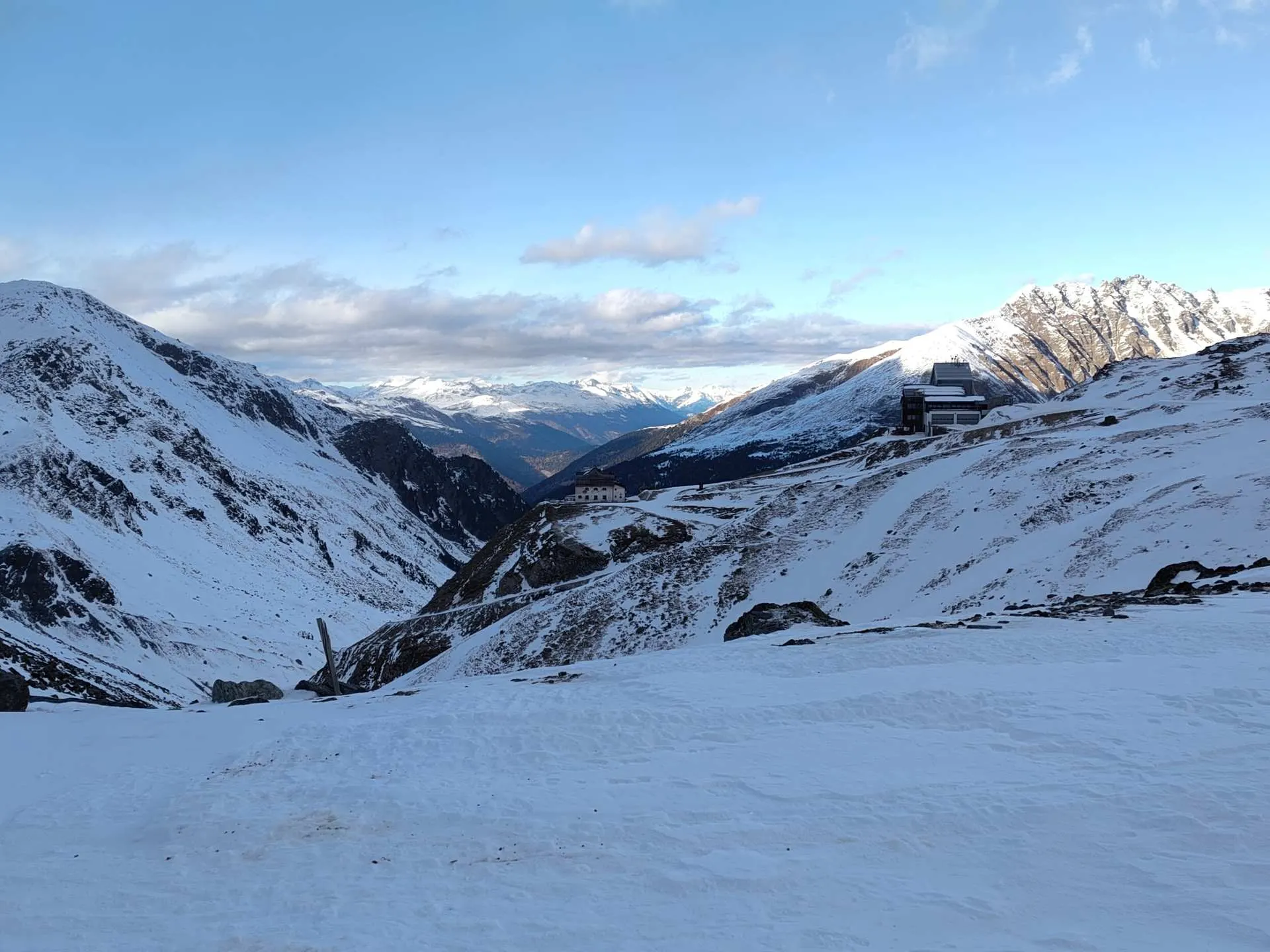
2,609 → 2,580 mPut skins on at the Schaubachhütte and traverse with a slight loss of elevation across flat ground to the base of the flank.
- 1
Steep slope to Königsspitze
2,580 → 3,849 mClimb up the continuously very steep slope in numerous kick turns directly to the summit of Königsspitze. Descent as ascent.
Download the GPX track
The ascent track of Königsspitze as a GPX file, for your GPS watch, phone app or route planner.
3.6 km · ↑ 1,326 m · high point 3,849 m · 378 track points
Download GPXAscent track: Skitourenguru. A track is a planning aid, not a guarantee: check the avalanche bulletin and conditions on the day and adapt the route on the ground.
More ski tours
Also from Schaubachhütte
Photo credits
Photos in the slider above, in order. Author and original on Wikimedia Commons (with licence) or komoot (used with permission).
- 01PlentnCC0(opens in a new tab)
- 02Paradise ChronicleCC BY-SA 4.0(opens in a new tab)
- 03PlentnCC0(opens in a new tab)
- 04PlentnCC0(opens in a new tab)
- 05StelvioparcCC BY-SA 4.0(opens in a new tab)
- 06Chris Riefenbergkomoot(opens in a new tab)
- 07Sebastiano ZampieriCC BY-SA 4.0(opens in a new tab)
- 08GerryMKKkomoot(opens in a new tab)
- 09PlentnCC0(opens in a new tab)
- 10Matteo AvventiCC BY-SA 4.0(opens in a new tab)