Skip to content

Looking for the buycycle marketplace?Visit buycycle.com

Settings

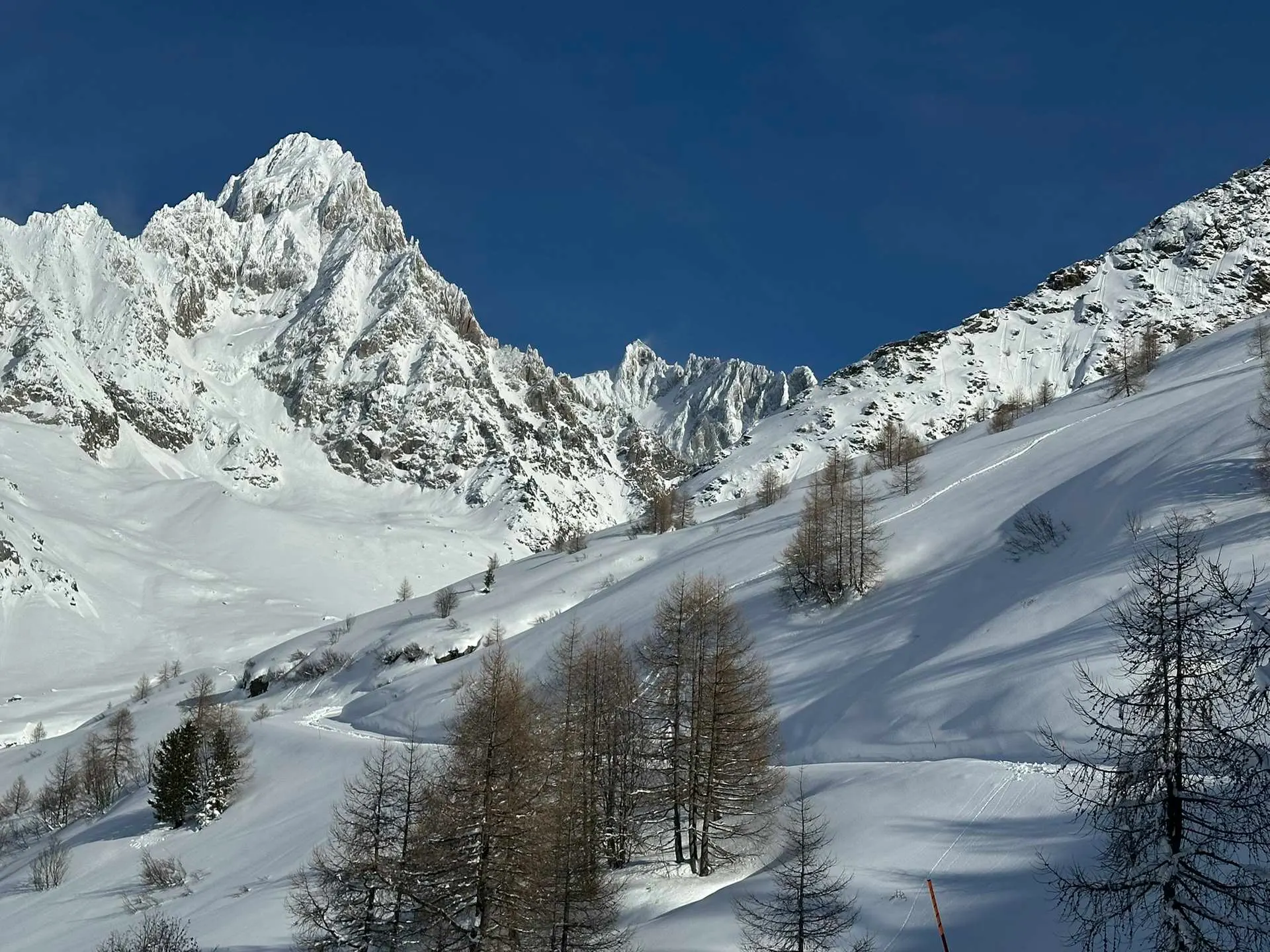
Snow-covered slope with larch trees in sunlight, leading towards sharp rocky peaks under a clear blue sky.
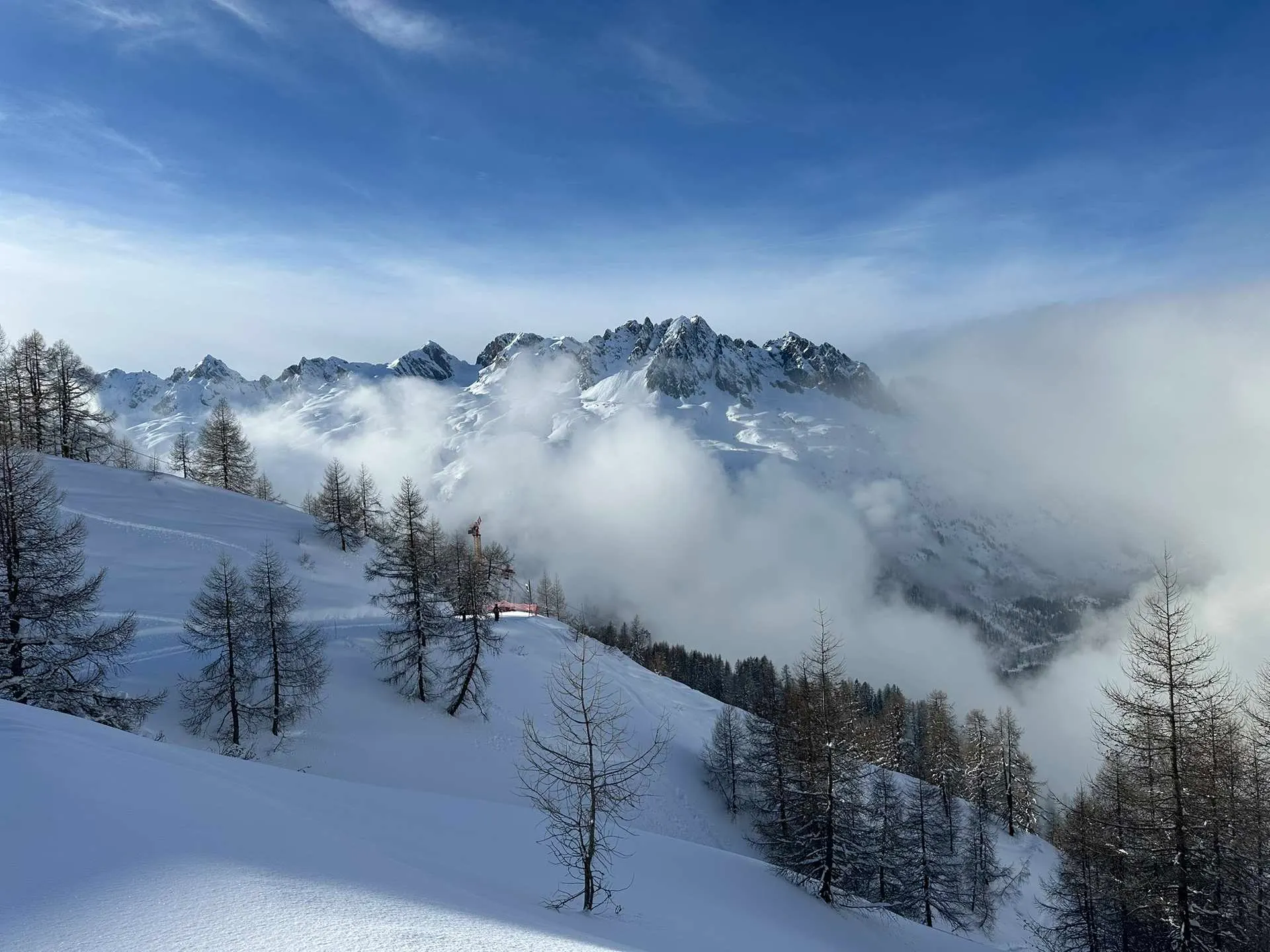
Snowy hillside with sparse trees, looking out over low valley fog toward sunlit snow-capped peaks.
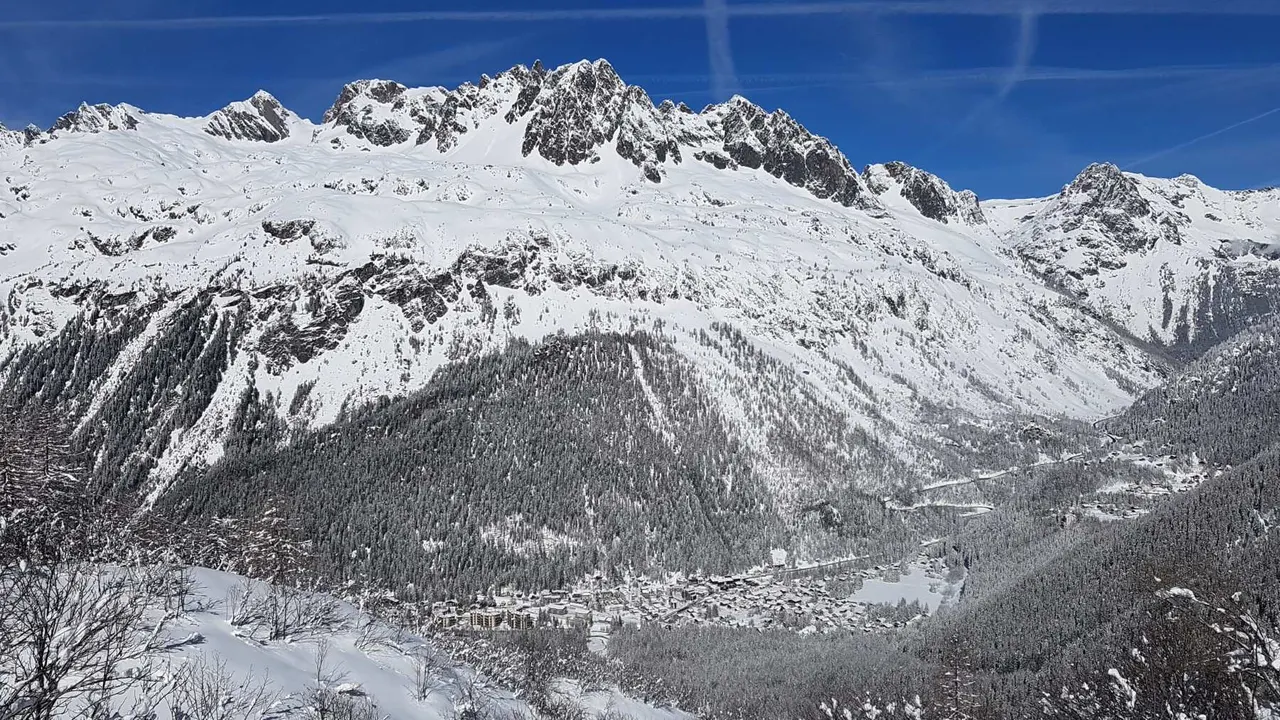
High viewpoint over a snowy valley with a village and forested slopes, beneath rugged, snow-covered mountains.
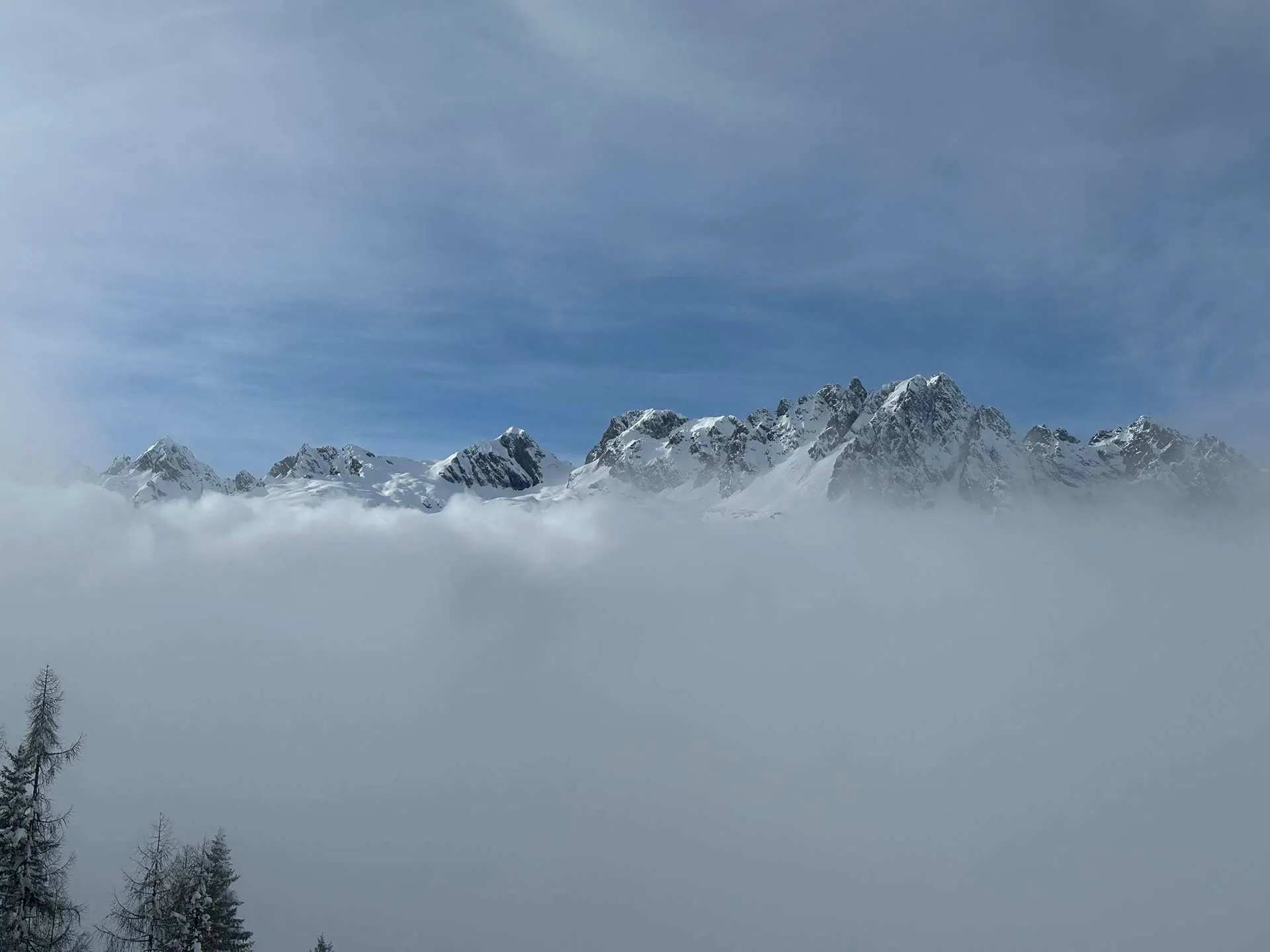
Jagged snow-covered peaks rising above a dense sea of fog and clouds under a pale blue sky.

Fenêtre du Tour

↑ 2,233 mDuration: 8.3 hDifficulty: AD+ Fairly difficult

Current conditions: Not enough dataUpdated

Fenêtre du Tour conditions today

Avalanche danger level

32
  • 3 · ConsiderableThe snowpack is moderately to poorly bonded on many steep slopes. Triggering is possible, even from low additional loads, particularly on the indicated steep slopes. In certain situations some large, and in isolated cases very large natural avalanches are possible.Steep slopes: steeper than about 30 degrees.Low additional load: an individual skier riding softly, not falling; a snowshoer; a group keeping distances of at least 10 m.High additional load: two or more skiers without good spacing; a snow groomer; explosives.How to read the avalanche bulletinSource & further information: European avalanche danger scale (EAWS) (opens in a new tab)above 2,700 m
  • 2 · ModerateThe snowpack is only moderately well bonded on some steep slopes; otherwise well bonded in general. Triggering is possible, primarily from high additional loads, particularly on the indicated steep slopes. Very large natural avalanches are unlikely.Steep slopes: steeper than about 30 degrees.Low additional load: an individual skier riding softly, not falling; a snowshoer; a group keeping distances of at least 10 m.High additional load: two or more skiers without good spacing; a snow groomer; explosives.How to read the avalanche bulletinSource & further information: European avalanche danger scale (EAWS) (opens in a new tab)below 2,700 m
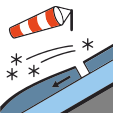
  • Wind slabWind slabs are formed when loose snow in near-surface layers (new snow or old snow) is transported and deposited by wind.Where: Highly variable but typically on leeward slopes, gullies and bowls, near distinct changes in slope angle, behind ridgelines or other wind-sheltered locations. More common above treeline.When: The wind slab problem can evolve very quickly. The problem lasts typically during the snowdrift event and tends to stabilize within a few days following the storm cycle.Travel advice: Avoid snow drifted deposits in steep terrain.How to read the avalanche bulletinSource & further information: Typical avalanche problems (EAWS) (opens in a new tab)
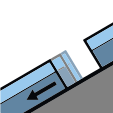
  • Gliding snowThe entire snowpack is gliding on the ground, typically on smooth ground such as grassy slopes or smooth rock zones. The release of a glide-snow avalanche is difficult to predict, although in many cases glide cracks open prior to release.Where: Primarily on smooth ground and on slopes of any aspect, but more often on sun-exposed slopes.When: Days to months; occasionally during entire winter-season. The release can occur at any time during the day. In spring, glide-snow avalanches occur often during the second part of the day.Travel advice: Avoid areas close to glide cracks.How to read the avalanche bulletinSource & further information: Typical avalanche problems (EAWS) (opens in a new tab)

Avalanche bulletin

This ski tour crosses 2 warning regions. The highest level is shown.How to read the avalanche bulletin

Mont-Blanc

88 % of the route

Valid from
Valid until
32
  • 3 · ConsiderableThe snowpack is moderately to poorly bonded on many steep slopes. Triggering is possible, even from low additional loads, particularly on the indicated steep slopes. In certain situations some large, and in isolated cases very large natural avalanches are possible.Steep slopes: steeper than about 30 degrees.Low additional load: an individual skier riding softly, not falling; a snowshoer; a group keeping distances of at least 10 m.High additional load: two or more skiers without good spacing; a snow groomer; explosives.How to read the avalanche bulletinSource & further information: European avalanche danger scale (EAWS) (opens in a new tab)above 2,700 m
  • 2 · ModerateThe snowpack is only moderately well bonded on some steep slopes; otherwise well bonded in general. Triggering is possible, primarily from high additional loads, particularly on the indicated steep slopes. Very large natural avalanches are unlikely.Steep slopes: steeper than about 30 degrees.Low additional load: an individual skier riding softly, not falling; a snowshoer; a group keeping distances of at least 10 m.High additional load: two or more skiers without good spacing; a snow groomer; explosives.How to read the avalanche bulletinSource & further information: European avalanche danger scale (EAWS) (opens in a new tab)below 2,700 m

Above 2700m considerable danger, lower down moderate danger.

Dry avalanches

  • Wind slabWind slabs are formed when loose snow in near-surface layers (new snow or old snow) is transported and deposited by wind.Where: Highly variable but typically on leeward slopes, gullies and bowls, near distinct changes in slope angle, behind ridgelines or other wind-sheltered locations. More common above treeline.When: The wind slab problem can evolve very quickly. The problem lasts typically during the snowdrift event and tends to stabilize within a few days following the storm cycle.Travel advice: Avoid snow drifted deposits in steep terrain.How to read the avalanche bulletinSource & further information: Typical avalanche problems (EAWS) (opens in a new tab)

Wet-snow avalanches

  • Gliding snowThe entire snowpack is gliding on the ground, typically on smooth ground such as grassy slopes or smooth rock zones. The release of a glide-snow avalanche is difficult to predict, although in many cases glide cracks open prior to release.Where: Primarily on smooth ground and on slopes of any aspect, but more often on sun-exposed slopes.When: Days to months; occasionally during entire winter-season. The release can occur at any time during the day. In spring, glide-snow avalanches occur often during the second part of the day.Travel advice: Avoid areas close to glide cracks.How to read the avalanche bulletinSource & further information: Typical avalanche problems (EAWS) (opens in a new tab)

Danger description

Instabilities at high altitude in wind-drifted snow.

Triggered avalanches:
• In high-alpine regions, above 2700m, wind slabs will form throughout the day with northerly winds. These slabs are found in the recent snow and increase in number with altitude. Size 2, occasionally 3 (medium to large).
• Aggravating factor: In the rare sectors where a persistent weak layer is buried in the snowpack, it could be triggered in a cascade avalanche effect and lead to a larger avalanche.
• Observable signs:
Cracking beneath skis, areas of snow accumulation, ...
• Below 2700m, a few wind slabs can be found, but these are mainly confined close to ridgelines. The avalanches concerned are mostly size 2 (medium).

Natural avalanches:
• Below 2500m, glide-snow avalanches are possible at any time of day or night. They are possible on smooth ground, such as rock slabs, rock bands or grassy slopes. Size 1 to 2 (small to medium).
• In high-alpine regions, a wind slab could release naturally under the additional load of wind-blown snow. Size 1 to 2 (small to medium).

Texts: automatic translation of the Météo-France bulletin. The original is authoritative.Full bulletin at Météo-France · issued

Val d'Entremont-Val Ferret

12 % of the route

Valid from
Valid until
Next update
2+ · ModerateThe snowpack is only moderately well bonded on some steep slopes; otherwise well bonded in general. Triggering is possible, primarily from high additional loads, particularly on the indicated steep slopes. Very large natural avalanches are unlikely.2+: the danger is more likely in the upper range of this level (sub-level published by SLF, the Swiss avalanche service).Steep slopes: steeper than about 30 degrees.Low additional load: an individual skier riding softly, not falling; a snowshoer; a group keeping distances of at least 10 m.High additional load: two or more skiers without good spacing; a snow groomer; explosives.How to read the avalanche bulletinSource & further information: European avalanche danger scale (EAWS) (opens in a new tab)

2+ · ModerateThe snowpack is only moderately well bonded on some steep slopes; otherwise well bonded in general. Triggering is possible, primarily from high additional loads, particularly on the indicated steep slopes. Very large natural avalanches are unlikely.2+: the danger is more likely in the upper range of this level (sub-level published by SLF, the Swiss avalanche service).Steep slopes: steeper than about 30 degrees.Low additional load: an individual skier riding softly, not falling; a snowshoer; a group keeping distances of at least 10 m.High additional load: two or more skiers without good spacing; a snow groomer; explosives.How to read the avalanche bulletinSource & further information: European avalanche danger scale (EAWS) (opens in a new tab) · Dry avalanches

above 2,200 m
  • Wind slabWind slabs are formed when loose snow in near-surface layers (new snow or old snow) is transported and deposited by wind.Where: Highly variable but typically on leeward slopes, gullies and bowls, near distinct changes in slope angle, behind ridgelines or other wind-sheltered locations. More common above treeline.When: The wind slab problem can evolve very quickly. The problem lasts typically during the snowdrift event and tends to stabilize within a few days following the storm cycle.Travel advice: Avoid snow drifted deposits in steep terrain.How to read the avalanche bulletinSource & further information: Typical avalanche problems (EAWS) (opens in a new tab)

The fresh and somewhat older wind slabs are in some cases still prone to triggering. Winter sport participants can release avalanches in some places. Mostly avalanches are medium-sized. Backcountry touring calls for careful route selection.

2 · ModerateThe snowpack is only moderately well bonded on some steep slopes; otherwise well bonded in general. Triggering is possible, primarily from high additional loads, particularly on the indicated steep slopes. Very large natural avalanches are unlikely.Steep slopes: steeper than about 30 degrees.Low additional load: an individual skier riding softly, not falling; a snowshoer; a group keeping distances of at least 10 m.High additional load: two or more skiers without good spacing; a snow groomer; explosives.How to read the avalanche bulletinSource & further information: European avalanche danger scale (EAWS) (opens in a new tab) · Wet-snow avalanches

below 2,400 m
  • Gliding snowThe entire snowpack is gliding on the ground, typically on smooth ground such as grassy slopes or smooth rock zones. The release of a glide-snow avalanche is difficult to predict, although in many cases glide cracks open prior to release.Where: Primarily on smooth ground and on slopes of any aspect, but more often on sun-exposed slopes.When: Days to months; occasionally during entire winter-season. The release can occur at any time during the day. In spring, glide-snow avalanches occur often during the second part of the day.Travel advice: Avoid areas close to glide cracks.How to read the avalanche bulletinSource & further information: Typical avalanche problems (EAWS) (opens in a new tab)

On steep grassy slopes more gliding avalanches are possible, in particular medium-sized ones. Caution is to be exercised in areas with glide cracks.

Full bulletin at SLF · issued

Source: Météo-France, issued , valid until .

Snow height

41cm

Valley · 1,326 m

Vallorcine

Upper

No reading

Source: Météo-France, read . Measured at stations nearby, not on the route.

Reported completions, last 48 h

No Strava segment mapped to this ski tour yet.

There is not enough recent information yet for conditions today on this ski tour. Avalanche danger level: 3 (Considerable) above 2,700 m, 2 (Moderate) below 2,700 m. Snow height: 41 cm (Vallorcine, 1,326 m).

A planning aid, not a safety check. Conditions today are compiled automatically and can be wrong. Decide on site, at your own risk.

Most recent reports

Weather

Source: Open-Meteo, fetched .

Forecast for the start and the summit, from November 27, 2026
ElevationToday Nov 27Sat Nov 28Sun Nov 29
Start1,230 m

4°-4°

Wind 9 km/h

4°-10°

Wind 11 km/h

7°-1°

Wind 7 km/h

Summit3,321 m

-10°-13°

Wind 32 km/h

-4°-13°

Wind 23 km/h

-5°-9°

Wind 9 km/h

Freezing level: today 1,800 m · Sat 3,070 m · Sun 3,030 m. Above this height precipitation falls as snow.

Route map

Ski tour data provided by Skitourenguru. For the daily avalanche risk rating and the danger spots along this route, head to Skitourenguru.

View the avalanche risk along the route onSkitourenguru (opens in a new tab)

PArgentière · 1,230 m1Fenêtre du Tour · 3,321 m

Elevation profile10.5 km · ↑ 2,233 m · high point 3,323 m

Ascent track: Skitourenguru

Route description

  1. P

    From Argentière through the forest

    1,230 → 1,982 m

    In Argentière, the ascent begins across open slopes before reaching the forest belt. Climb steeply via a wide clearing in steady kick-turns.

  2. 1

    Through the valley floor

    1,982 → 2,481 m

    Above the treeline, the slope eases. Follow the wide valley floor uphill through gentle hollows.

  3. 2

    Steep slope to the upper basin

    2,481 → 3,031 m

    Before the upper basin, the slope steepens massively. Overcome the steep slope in numerous kick-turns; ski crampons are useful in hard snow.

  4. 3

    Final ascent to Fenêtre du Tour

    3,031 → 3,321 m

    Across an open plateau, head toward the notch. The final vertical meters lead up a steep firn flank to the Fenêtre du Tour. Descent as ascent.

Download the GPX track

The ascent track of Fenêtre du Tour as a GPX file, for your GPS watch, phone app or route planner.

10.5 km · ↑ 2,233 m · high point 3,323 m · 1,163 track points

Download GPX

Ascent track: Skitourenguru. A track is a planning aid, not a guarantee: check the avalanche bulletin and conditions on the day and adapt the route on the ground.

All ski tours in Mont-Blanc

Photo credits

Photos in the slider above, in order. Author and original on Wikimedia Commons (with licence) or komoot (used with permission).

  1. 01Martinkomoot(opens in a new tab)
  2. 02Martinkomoot(opens in a new tab)
  3. 03Wolfgangkomoot(opens in a new tab)
  4. 04Martinkomoot(opens in a new tab)