Looking for the buycycle marketplace?Visit buycycle.com

Bliggspitze
↑ 1,018 mDuration: 3.3 hDifficulty: AD Fairly difficult
Current conditions: Not enough dataUpdated
Bliggspitze conditions today
Avalanche danger level
- 3 · ConsiderableThe snowpack is moderately to poorly bonded on many steep slopes. Triggering is possible, even from low additional loads, particularly on the indicated steep slopes. In certain situations some large, and in isolated cases very large natural avalanches are possible.Steep slopes: steeper than about 30 degrees.Low additional load: an individual skier riding softly, not falling; a snowshoer; a group keeping distances of at least 10 m.High additional load: two or more skiers without good spacing; a snow groomer; explosives.How to read the avalanche bulletinSource & further information: European avalanche danger scale (EAWS) (opens in a new tab)above 2,600 m
- 2 · ModerateThe snowpack is only moderately well bonded on some steep slopes; otherwise well bonded in general. Triggering is possible, primarily from high additional loads, particularly on the indicated steep slopes. Very large natural avalanches are unlikely.Steep slopes: steeper than about 30 degrees.Low additional load: an individual skier riding softly, not falling; a snowshoer; a group keeping distances of at least 10 m.High additional load: two or more skiers without good spacing; a snow groomer; explosives.How to read the avalanche bulletinSource & further information: European avalanche danger scale (EAWS) (opens in a new tab)below 2,600 m
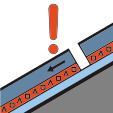 Persistent weak layerThe avalanche problem is related to the presence of one or more persistent weak layers in the old snowpack. These weak layers typically include faceted crystals, depth hoar or surface hoar crystals.Where: The avalanche problem can be widespread or quite isolated. It can exist in all aspects, but is more frequently found on shady, wind sheltered slopes.When: Weak layers can persist for weeks to months; possibly even during most of the winter season.Travel advice: Travel conservatively and avoid terrain features (e.g. large steep slopes) where consequences of being caught are large (e.g. deep burial). Consider the history of weather and snow cover processes in the area. Be extra cautious in areas with a thin snowpack and at the transition from thin to deep snowpack. The release of avalanches in persistent weak layers are a significant cause of recreational avalanche fatalities.How to read the avalanche bulletinSource & further information: Typical avalanche problems (EAWS) (opens in a new tab)above 2,600 m
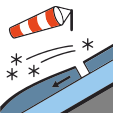 Wind slabWind slabs are formed when loose snow in near-surface layers (new snow or old snow) is transported and deposited by wind.Where: Highly variable but typically on leeward slopes, gullies and bowls, near distinct changes in slope angle, behind ridgelines or other wind-sheltered locations. More common above treeline.When: The wind slab problem can evolve very quickly. The problem lasts typically during the snowdrift event and tends to stabilize within a few days following the storm cycle.Travel advice: Avoid snow drifted deposits in steep terrain.How to read the avalanche bulletinSource & further information: Typical avalanche problems (EAWS) (opens in a new tab)above 2,400 m
Source: Avalanche.report, issued , valid until .
Snow height
28cm
Valley · 2,227 m
Rifflsee Talstation Grubenkopf
Upper
No reading
Source: LWD Tirol (avalanche.report), read . Measured at stations nearby, not on the route.
Reported completions, last 48 h
No Strava segment mapped to this ski tour yet.
There is not enough recent information yet for conditions today on this ski tour. Avalanche danger level: 3 (Considerable) above 2,600 m, 2 (Moderate) below 2,600 m. Snow height: 28 cm (Rifflsee Talstation Grubenkopf, 2,227 m).
A planning aid, not a safety check. Conditions today are compiled automatically and can be wrong. Decide on site, at your own risk.
Most recent reports
No reports for this ski tour yet.
Weather
Source: Open-Meteo, fetched .
| Elevation | Today Nov 27 | Sat Nov 28 | Sun Nov 29 |
|---|---|---|---|
| Start2,432 m | -5° / -13° Wind 13 km/h | -4° / -13° Wind 8 km/h | 0° / -9° Wind 8 km/h |
| Summit3,449 m | -13° / -16° Wind 12 km/h | -9° / -16° Wind 11 km/h | -7° / -10° Wind 9 km/h |
Freezing level: today 2,090 m · Sat 2,200 m · Sun 2,740 m. Above this height precipitation falls as snow.
Route map
Ski tour data provided by Skitourenguru. For the daily avalanche risk rating and the danger spots along this route, head to Skitourenguru.
View the avalanche risk along the route onSkitourenguru (opens in a new tab)
This ski tour
Zoom in to see huts, parking and bus stops.
Elevation profile4.5 km · ↑ 1,018 m · high point 3,449 m
Ascent track: Skitourenguru
Route description
- P
From Taschachhaus into the valley floor
2,432 → 2,602 mRight at the Taschachhaus, the track begins with a short, flat traverse and loses a few metres into the valley floor. One climbs across gently rising slopes and overcomes a first short steep step up to 2602 m.
- 1
Across stepped hollows to the cirque
2,602 → 3,026 mAt varying gradients, the line continues upward across wide hollows and flatter ground. Between 2773 m and 2954 m, a steep slope ramps up. Behind it, the cirque eases off briefly again up to 3026 m below the summit base.
- 2
Steep slope to Bliggspitze
3,026 → 3,449 mFrom 3026 m onward, the consistently very steep final slope to the Bliggspitze follows. In firm snow, ski crampons are needed on the upper metres. Depending on snow conditions, the ski depot is set up on the ridge or below the summit. Descent as ascent.
Download the GPX track
The ascent track of Bliggspitze as a GPX file, for your GPS watch, phone app or route planner.
4.5 km · ↑ 1,018 m · high point 3,449 m · 475 track points
Download GPXAscent track: Skitourenguru. A track is a planning aid, not a guarantee: check the avalanche bulletin and conditions on the day and adapt the route on the ground.